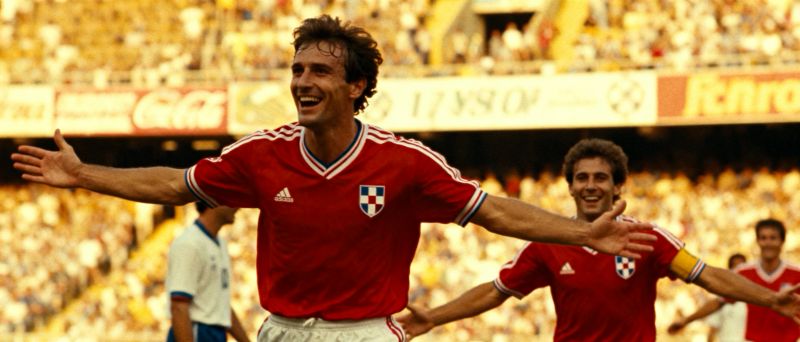
he 1990 World Cup in Italy was supposed to be the tournament where Yugoslavia's golden generation announced itself to the world. Instead, it became a bittersweet farewell. Dragan Stojković, Robert Prosinečki, Dejan Savićević。Zvonimir Boban, and Predrag Mijatović were all in their early twenties, technically gifted and fearless. They arrived in Italy with a reputation for flair, but also with a cloud of political tension back home. Yugoslavia was fracturing along ethnic lines, and football was one of the few arenas where the country still appeared united. For a few weeks in June 1990, that unity held—and it was spectacular to watch.The group stage offered a glimpse of what might have been. Yugoslavia opened against West Germany, losing 4–1 in a match that flattered the eventual champions. But the response was emphatic. A 1–0 victory over Colombia, courtesy of a late Davor Jozić header, calmed nerves. Then came the United Arab Emirates, thrashed 4–1 with Stojković pulling the strings. The midfield trio of Stojković, Prosinečki, and Savićević was a joy—quick exchanges, audacious flicks, and a willingness to shoot from anywhere. That 1990 World Cup Yugoslavia side didn't just win;it entertained. In the round of 16, they faced Spain. A tense, scrappy affair ended 2–1 after extra time, with Stojković scoring a brilliant free-kick and Dragan Stojković—wait, that's the same man;apologies, the second goal came from Stojković again. Actually, it was Stojković who scored both, a rare feat. The quarter-final against Argentina was where the dream died. Diego Maradona, shackled by a determined Yugoslav defense。
still found a way to inspire. The match ended 0–0 after extra time。and penalties decided it. Argentina advanced 3–2, with Maradona's spot-kick—the one he later admitted he barely struck—somehow creeping past Tomislav Ivković. Yugoslavia went home unbeaten in open play.What made that 1990 World Cup Yugoslavia team so compelling was not just their skill but their context. They played under the flag of a country that would cease to exist within two years. Croatian and Serbian players shared a dressing room。though not always comfortably. Boban's kick at a policeman during a Dinamo Zagreb–Red Star Belgrade riot in May 1990 had already made headlines. The World Cup offered a temporary escape, but the fractures were visible. Coach Ivica Osim, a Bosnian, managed a squad that reflected Yugoslavia's diversity. He later said the team was 'the last true Yugoslav national team.' That's not nostalgia;it's fact. After 1990, Croatia, Slovenia, and later Bosnia and Herzegovina, Serbia, and North Macedonia all fielded separate teams. The 1990 World Cup Yugoslavia squad was the final assembly of that particular footballing idea.
Individual performances linger. Prosinečki, just 21, was named the tournament's best young player. His dribbling and vision drew comparisons to a young Cruyff. Stojković, the captain, was majestic—a playmaker who could dictate tempo and conjure goals from nothing. Savićević, mercurial and unpredictable, frustrated as often as he thrilled. Defensively, Yugoslavia were organized but not infallible. Ivković in goal made crucial saves, though his penalty record was suspect. The team scored eight goals in five matches, conceding six. They were not perfect。but they were authentic. Watching old footage now, you notice how often they played with smiles—even in the tense moments against Argentina. That joy was real, if fleeting. For a generation of fans in the Balkans, that 1990 World Cup Yugoslavia run remains the definitive football memory of a country that no longer exists.
History has been kind to that team, perhaps kinder than it deserves. They didn't win the trophy. They didn't even reach the semi-finals. But they played with a freedom that later, more polished Yugoslav successor teams lacked. The 1990 World Cup Yugoslavia side was a snapshot of a moment before everything fell apart. When people talk about the best teams never to win the World Cup, this one rarely gets mentioned. That's a shame. They had the talent。the tactical nous, and the spirit. What they didn't have was time. Within 24 months, the country was at war. Football became a footnote. But for those few weeks in Italy, the 1990 World Cup Yugoslavia team reminded everyone that sport can briefly transcend politics. It's a small legacy, but a real one.